
At Rasa Legal, we routinely collect data to better understand our clients and their needs. The results offer a unique window into the trends of people seeking record clearance: what motivates them, what challenges they face, and what changes they hope to achieve by clearing their record. Not only is this interesting, this data helps us learn more about the people we serve and the broader trends shaping record clearance today.
Who Uses Rasa’s Services?
What do people with records look like, and who typically reaches out to Rasa for record clearance services? By looking at deidentified information about our users, and comparing it to national trends, we can start to see what makes our user base unique, and in what ways they track with national data. Together, these insights paint a fuller picture of who is using our services to achieve record clearance and why.
Gender, Age, and Parenting Status
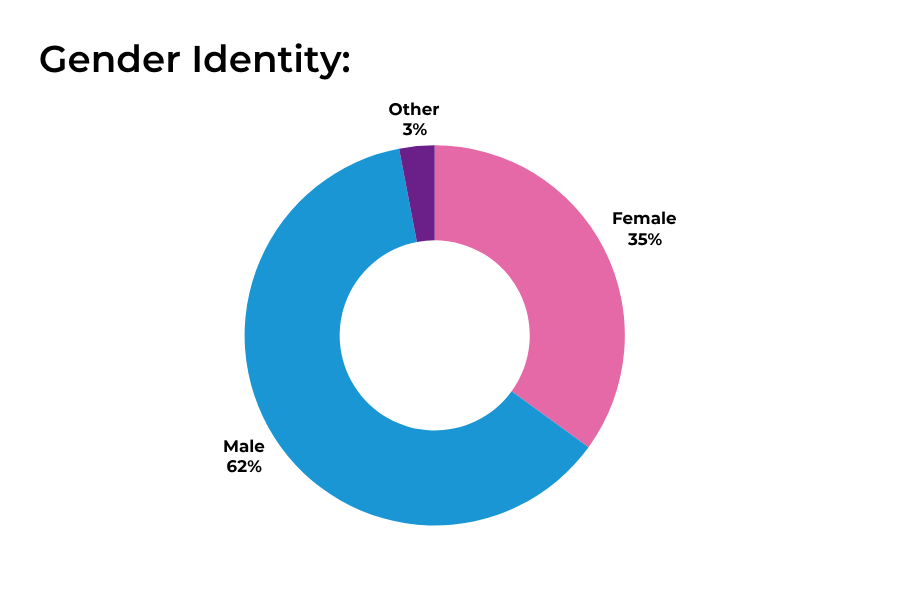
62% of Rasa’s users identified as male, which matches national incarceration patterns showing that men are significantly more likely to be incarcerated than women. However, women are more represented in our data than in the overall justice-affected population.

More than half of Rasa users have dependents–either minor children or elderly parents they care for--a number that is similar to, but slightly above, the national average. Most of Rasa’s users are between 25 and 55 years old. 56% of people using Rasa’s platform are between the ages of 36 and 55, with an additional 19% falling between the ages of 26 and 35.
Trends in Education and Employment
The data also gave us insight into how our users compare to national averages in education and employment. People on Rasa’s platform are less likely to have completed college. Only about 10% of our user-based graduated from college compared to more than 30% nationally as of 2019. These findings are consistent with national research showing that people who have been incarcerated graduate from college at rates below 10%. Similarly, people with records tend to have a higher unemployment rate (on our platform it is 18%) than the national average of under 5%.

Given their low income, 31% of our user base report being on government assistance (compared to ~30% of the national average).
Overall, our users sit statistically between the national “average” population and those who have been or are currently incarcerated. When it comes to professional attainment, those with criminal records are less likely to be employed or have college degrees. Not only do these trends make you more likely to end up in the justice system, they also make record clearance more difficult.
Why Do People Use Rasa?
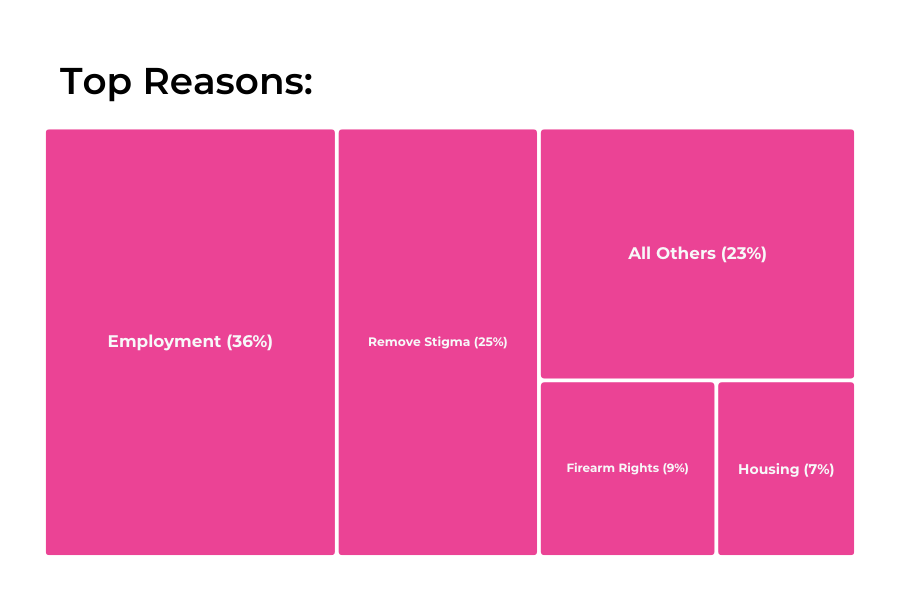
Once we understood who our users are, we wanted to learn more about why they use Rasa for record clearance. The data gives us a clear picture: employment is the top motivator. But the reasons people seek to clear their records extend well beyond finding a job. They also include increasing housing stability, restoring confidence, removing stigma, and reclaiming rights.
Data on Employment
Our data shows that one of the biggest reasons people use Rasa is to improve their employment opportunities. More than one in four users said they signed up for record clearance to get a new job or promotion. An additional ~10% said they were hoping to get a license. Over half said they had been denied employment because of their criminal record.
Economic need is an intersecting factor. Roughly 73% of Rasa’s users report income at or below 200% of the Federal Poverty Line. This is significantly higher than the 23% of people under 200% FPL nationally. That is a pretty staggering difference that highlights how a criminal record can make it much harder to find and keep stable employment, trapping people in a cycle that record clearance helps break.
These findings align with other data and interviews showing that employment is a huge barrier for people with records. It is also one of the main reasons they seek record clearance. People use Rasa to find a new job or get a promotion, and because a record adds economic stressors that clearing can help solve.
Data on Other Improvements
But employment isn’t the only reason people use Rasa. Our data shows that many are motivated by other important goals, such as:
- Getting rid of stigma (over 20% of respondents)
- Improving self-confidence (5%)
- Restoring rights (10%)
This also provides important insight into why people want to clear their record. A cumulative 35% have their number one reason for record clearance related to improving the way they see themselves, and the way they interact with the world. This tracks with the fact that the second most common reason given for record clearance was to reduce stigma. All in all, then, our user base is largely motivated by employment but has a host of reasons they want to clear their records.
Making Sense of the Data
All of this data is interesting, but it also helps us understand larger trends in record clearance. By looking closely at these numbers, we can better understand what record clearance looks like nationally.
In General
Employment stands out as one of the biggest barriers for people with records and one of the main reasons they seek record clearance. When someone can’t find stable work, it makes the reentry process harder and makes it more difficult to afford the costs of clearing a record.
Our data also reminds us that record holders are ordinary people. They want jobs, stability, confidence, and the ability to exercise their rights. Nearly one in three Americans has a criminal record, so it shouldn’t be surprising that people with records look like everyone else. The justice system directly affects many of our friends, coworkers, and neighbors.
While Rasa platform users tend to have lower education and higher unemployment rates, these are factors that often make justice involvement more likely. The trends we see reflect systemic barriers that compound the effects of a criminal record.
Intersections with Rasa
The data confirms that Rasa is addressing the needs of a large portion of record holders. Employment remains one of the top reasons people want record clearance, yet a criminal record makes finding work harder. Rasa helps solve that problem by making the process more affordable and accessible than traditional legal routes.
Our services also go beyond employment. By helping people remove stigma, regain self-confidence, and restore their rights, Rasa empowers individuals to take back control of their futures. If you’re ready to begin your own record clearance process, you can get started today using our eligibility tool. It only takes a few minutes to check your record and see if you qualify.